For college-bound high school students, the time is ripe to evaluate your student profile and work towards defining an impactful resume for college admissions. Colleges want to see that you are committed to extracurricular activities throughout the school year, but they also love it when you make the effort to engage constructively during your summer vacations. What you do with your time can help you stand out from other applicants who have similar test scores and GPAs.
So, do you excel in the classroom, but do nothing but study? Or are you able to balance the demands of a rigorous course-load with an active calendar full of leadership roles, community service, sports and employment endeavours? Let’s explore the different aspects of an excellent resume more categorically!
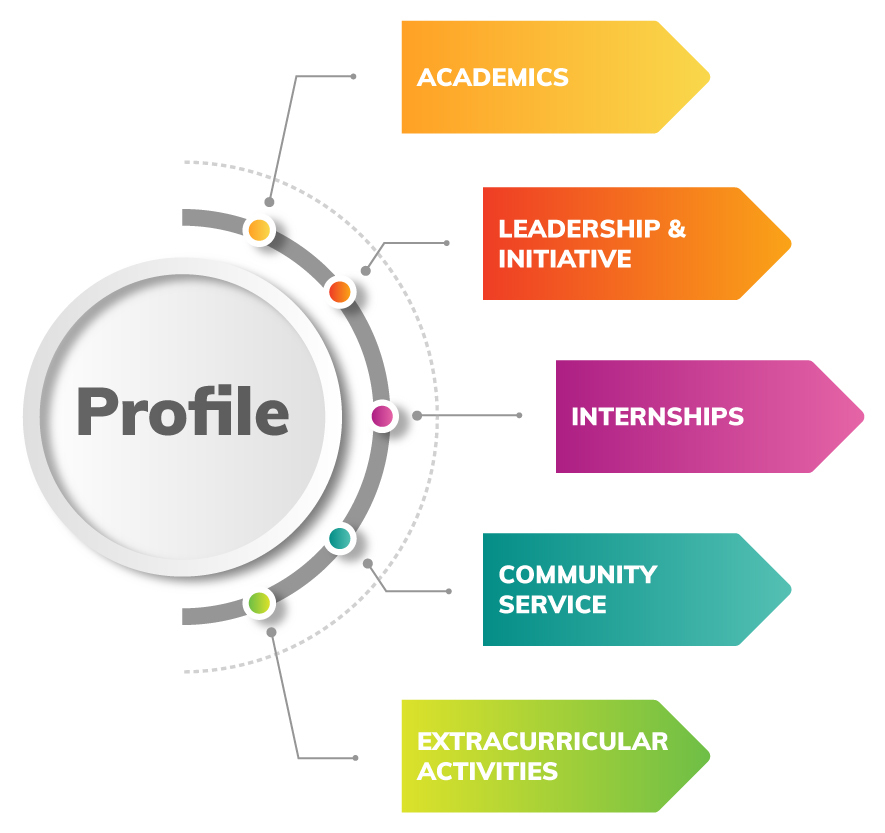
Here, Quality is key, not quantity. Find something that interests you and explore it more deeply. You do not have to be in every club or organization, but rather, join the ones that allow you to grow in your interests and talents. Here are different types of extracurricular activities that colleges actually want to see. With a little something for everyone, you’re sure to find something that you will enjoy!
ARTS
Creativity is always an asset when it comes to college applications. Students active in creative arts like music, dance, drama and visual arts tend to be open-minded and think outside the box. You can consider sending a portfolio of your art (including sculpture, photography, painting, etc), music or dance recordings to demonstrate your talent as a supplement to your college application to make your candidacy more competitive. Standardized exams like the Rock School or the Trinity certificate exams are also a good way to demonstrate in-depth knowledge of a particular form of creative art.
ATHLETICS
Participating in sports is a great way to showcase your teamwork skills as well as individual focus indicating that you place an emphasis on athletics and physical fitness. In addition, they can highlight your leadership skills if you are able to become a team captain or play some other important role on your team.
However, sports will be the determining factor in a college admission decision only rarely. In order for sports to get you into college, you need to be a top athlete. This doesn’t just mean that you’re the captain of your school’s sport team or are the top scorer. Typically, the students who get into college for sports are competing at least at the national level in their sport. That said, If you participate regularly in sports over a prolonged period of time, you’ll exemplify dedication, passion, and commitment. This is an advantage on your application in the same way that any other extracurricular achievement would be.
CLUBS, EVENTS AND COMPETITIONS
From academic, environmental or debating clubs to inter-school events and competitions – when deciding which ones make the cut, keep in mind that colleges would much rather see you excited about one or two key experiences than sporadic involvement in 20 clubs.
If you like science, compete in science fairs, and be actively involved in the school’s science club. If you care for the environment, go beyond attending weekly meetings or cleanliness drives and spend more hours being personally active on that front or in association with an organization.
LINKS TO ONLINE WORK
You can have links to your blogs, portfolios, photography and videography and such social media presence which represents your skills, creativity and hard work.
Colleges are looking for top notch applicants who they think will succeed in college and beyond. The beyond part is what they hope to glean from your extracurricular profile. And they especially like to see that you have had a LEADERSHIP ROLE.
LEADERSHIP & INITIATIVE
If you have a few extracurricular activities in which you’re involved, but not particularly dedicated, your application won’t be the best it can be. But, you can turn these activities into impressive leadership roles that will catch the attention of admissions committees. Leadership positions in the school’s student government, school teams and events can be impressive if you prove your detailed involvement and responsibilities.
Colleges also look out for the extent you’ve gone to, to pursue your interests, ie. Self-Initiative. Say, if your school doesn’t offer activities related to your interests or passions, consider starting a club at school. Starting a club involves planning, budgeting, interacting with other students, convincing teachers, etc. This is a great solution which not only fills a void in your school offerings, but also exemplifies your leadership and creativity.
Additionally, long term association with an activity or organization shows commitment and consistency. It would be like a cherry on the cake if it culminates into a leadership role; however, even if you don’t take a formal leadership title, you may be called upon to coach, manage, and set a good example for younger participants.
INTERNSHIPS
Here's a myth about college admissions: to get into a good school, you have to sign up for high-powered summer programs—the more exotic and expensive, the better. Yes, summer programs or classes on a college campus can be rewarding. But, traditional summer jobs—at the local clinic, NGO, legal office, art gallery—can be just as valuable. So, stay active and productive during the summer. But don't feel obligated to pile up "prestigious" activities just because you think they'll enrich your resume.
The learning experience that is gained through an internship is worth more than any monetary compensation you may expect. Internships can be of various kinds. You can take up a Job-Shadowing opportunity which involves observing or doing small tasks in a professional setting to get an idea of what a particular field is like – a sales outlet, clinic or a manufacturing unit.
You can also take up an opportunity to work in a field job and conduct surveys which can ultimately conclude with writing a field report or research paper. You can also cold call professors or find connections with someone to collaborate on a research paper as a part of your internship take-away. The initiative required to seek out these specialized positions can help show a student’s dedication to a given field.
Colleges like to see continuity and commitment to a community service activity instead of a bunch of one-offs. If you enjoy art, volunteer at a local children’s center to help kids with their creative processes, or put up an art exhibition for charity. If you love to play music, volunteer to play at an old age home. If an animal lover- shelters are always in need of sincere volunteers. There are so many easy ways to apply whatever you love to helping out in your community – just think creatively!
Besides individual efforts, you should also take up community engagement which means working in groups on community problems, like beautifying a local park or participating in an environmental initiative. It reflects problem-solving skills, group awareness and understanding of the common good. Colleges love to see collaboration, so try to spend your summer working with others versus only on solo projects.
Keep in mind, however, that colleges are wary when you add a ton of extracurricular in your 11th and 12th grades. So, don’t participate to merely add something to your application. It’s better to choose what you love, so you’ll benefit from the experience in more substantial ways than just supporting your application.
ACADEMICS
Last but not the least, your academic profile would still hold the top-most place when admissions officers evaluate your resume. So, ask yourself – what have I done to pursue my academic interests outside of my classroom and textbooks? Besides participation in school clubs, competitions and quizzes, there a ton of other avenues for you to go that extra mile. Below are some academic related honours, awards and activities which are sure to impress the admissions committee:
- Online classes on Coursera and edX - With tons of subjects from robotics to Greek history, you get to learn from past lectures by Stanford and Harvard professors.
- Spell bee – tests the spelling and literary skills of students.
- Research Paper
- Summer School
- Academic Essay Competitions (hosted by various universities like the LSE)
- Science and Math Olympiads
- National level Quizzes
- Robotics and Science Fairs
- National Science Talent Search Examinations, Euclid Math Contest
- Model UN
- APs
Even if you have an achievement that doesn’t exactly match one of the examples above, don’t worry – you can still put it in your resume! Also, an academic award that’s great to include on your application is one that’s relevant to your academic interests and strengths.
REFLECT COURSE OR CAREER CHOICES
It is advisable that the activities you undertake should somewhat align with your college and study aspirations. For instance, if you are applying for a STEM related course in a large university, you should include more activities which show your competitiveness in science, lab experience, coding and tech knowledge. Similarly, an art school would look for a profile which highlights a passion for art in all its multiple facets. Whereas, a liberal arts college would look for a more well-rounded and balanced student profile.
I would additionally like to mention a unique aspect of student profiles which reflect outstanding commitment to the pursuit of a single sport, art or any other activity; in such cases, where the extensive time engagement of the student is evidenced by the focused achievements in a specific field, other activities or internships may not be needed. However, this is ideally a strategic decision taken by the student’s Counsellor.
You could ask someone to spend a minute or so glancing at your resume and get a good sense of who you are, what you’ve done, and why you are worth interviewing. So, spend this time at home, consciously evaluating your candidature for college and create a resume which is an accurate and impressive reflection of who you are!