South Korea could be the next big study abroad destination | Collegify
College Applications
South Korea could be the next big study abroad destination
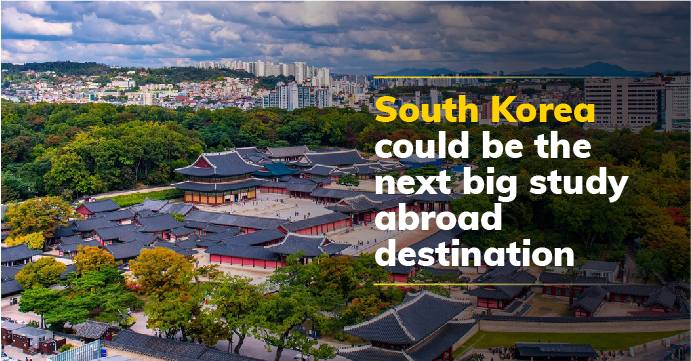
South Korea's popularity in India is growing, driven by its diverse cultural appeal and increasing interest from Indian students. Scholarships from the South Korean government and universities attract international students. The country is becoming a favorable destination for businesses
South Korea has been gaining popularity in India due to its multifaceted appeal, which includes various aspects of Korean culture such as food, fashion and language, beyond the K-pop craze. The Oxford English Dictionary's recognition of 26 Korean words, including 'K-drama' and 'Hallyu,' is a testament to Korea's global impact. In 2020, the Indian government included Korean as one of the eight foreign languages in schools, acknowledging its importance. Cultural exchanges, like music festivals during the Hornbill Festival in Nagaland, contribute to a deeper understanding and appreciation of Korean traditions.
A waitlist is managed differently at every university. The practical priority is consistent: follow the institution’s exact update rules, but secure and act on an existing offer while the waitlist remains uncertain.
Korean celebrities, such as BTS, Song Joong-ki and IU, have gained significant popularity in India, adding to the growing admiration for Korean entertainment. Indian platforms like Zee5 and MX Player actively dub Korean shows into local languages, broadening their accessibility and appeal. The surge in popularity has led to a growing interest in learning the Korean language, with people incorporating Korean words into their conversations. This reflects a broader fan culture beyond K-pop, encompassing K-movies and K-dramas, particularly among India's youth.
Along the same grain of multicultural exchange, Korea has been gaining popularity among Indian students as a study-abroad destination. However, the number of Indian students enrolled in Korean universities is currently low due to language barriers and limited awareness about the available opportunities. To address this, Korean universities are collaborating with Indian universities to offer scholarships and attractive opportunities to Indian students.
Some Indian schools and colleges have also introduced Korean language classes. Korean language programs and courses are available at universities such as DU, Jamia Milia, Christ University, Manipur University, and Nalanda University. Recently, JNU started a Korean training program to train local students as language teachers. King Sejong Institute has been conducting online classes across India, which has seen increased registrations in the past 5 years and trained around 2400 students.
Is studying in South Korea expensive?
What does studying in South Korea cost? — checked 10 September 2026
Korea’s Study in Korea portal reports average annual undergraduate tuition of about KRW 6.82 million: roughly KRW 4.27 million at national and public universities and KRW 7.63 million at private universities. The exact fee varies by institution and subject. The same portal estimates average living expenses at about KRW 750,000–1,000,000 per month. Families should use the university’s current fee page and budget in Korean won before converting to rupees.
Scholarships available
The Global Korea Scholarship has separate, intake-specific guidelines for undergraduate and graduate applicants. Benefits, quotas, eligible universities, routes and deadlines must be taken from the relevant year’s official notice. University scholarships also vary: the Korean government portal says many universities offer tuition support based on academic performance, but the percentage and renewal rules are institution-specific. Eligibility is not a guarantee of an award.
There are two types of scholarships available to students depending on the university location.
Scholarship Type A covers 30% of the minimum tuition fee for undergraduate students who have outstanding GPA records. For graduate students, there is a full tuition fee exemption for students who have outstanding GPA records and are recommended by faculty. Students who are just recommended by faculty and do not have exceptional grades will be given only 80% of tuition fees. Graduate students who are enrolled in the field of international relations will get a full tuition fee exemption if they have outstanding GPA records.
Scholarship Type B covers 50% of tuition fees for undergraduate students who have outstanding GPA records. For graduate students, a full tuition fee exemption is available for students who are recommended by professors, researchers, and research institutes. Graduate students with outstanding GPA records will get 50% of the tuition fee.
According to data from South Korea's Ministry of Education, 1,328 Indian students were studying in the country in 2022, which is 0.8% of the country's total international student population. However, some experts believe that the low number of Indian students enrolled in South Korean universities is due to a language barrier and the country's limited popularity as a study destination.
Experts have forecasted that due to the strict regulations set by Canada and the UK, there may be a shift in the market towards other countries such as Germany, Singapore, Ireland, the Netherlands, and South Korea in 2024. These countries may become more attractive to businesses looking to operate in a more favourable regulatory environment.
This article was originally published by The Economic Times on 20th May 2024.