


In India, Wren and Martin is a family heirloom that is reverentially handed down from generation to generation. Wren and Martin is of course a shortened version of High School English Grammar and Composition by P.C. Wren, M.A. (OXON) and H. Martin, M.A. (OXON), O.B.E. published 1935.
The book is divided into two “books”. Book I deals with Grammar and is usually as far as most readers will venture. Book II, Composition, has four parts in turn. Part I explains the analysis and synthesis of clauses and sentences. Part II focuses on correct usage including subject verb agreement and idioms. Part III gives examples of various structures including verb patterns and question tags. Part IV is Written Composition, largely focused on literary output and obsolete formats of letter writing from yesteryear.
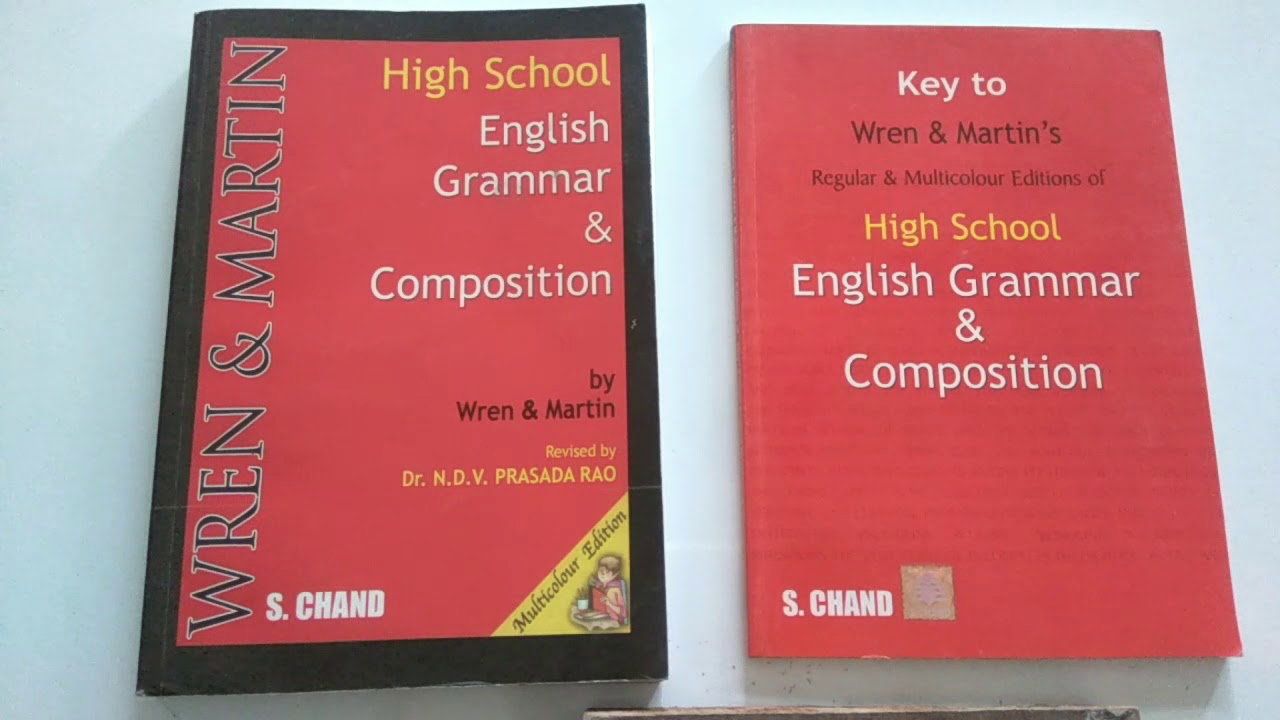
Now don’t get us wrong. We are not remotely close to suggesting that Wren and Martin is not an excellent resource. What we do want you to question is just how far simply “reading Wren and Martin” will help improve your child’s writing skills. If “reading” Wren and Martin means simply reading through the book and solving all the exercises (there’s a key out as well, has been for ages) it will leave your child with the ability to speak in grammatical terms. However, just being able to point out a clause will not necessarily translate to real world skills like interviewing or writing an assignment or article. Simply asking your child to read through Wren and Martin will not allow him to develop his or her communication skills because at the end of the day Wren and Martin is a dictionary of rules and definitions. If you want to improve your child’s overall facility with language, you need to look beyond Wren and Martin.
Even standardized tests focusing on college-readiness such as the ACT and the SAT test students not on their ability to identify grammar terms but on their ability to proofread and modify sentences to communicate ideas coherently and forcefully. Wren and Martin is pretty much irrelevant for such standardized tests.
Here are four effective and fun ways in which you can motivate your children to better language skills:
Make vocabulary part of the conversation at home.
Challenge yourself and your child by learning three new words every day (install a vocabulary app!) and make them part of the conversation. Come up with fun challenges. For instance, during a five minute conversation every sentence needs to use one of those new words. Whoever fails to do that loses!
Listen to Ted-X talks and speeches from scientists and writers with your children.
Pause the video after 5 min. Discuss whether the speaker made the topic interesting, how did she do that (body language, pauses, content, etc.) Try coming up with as detailed an analysis as possible. This will help your children appreciate the importance of nonverbal communication and motivate them to apply their learning in their own presentations. Once you have discussed out the presentation, ask your children to write down the minutes of the discussion. This will make writing part of the ethos at home and not something that is limited to school.