


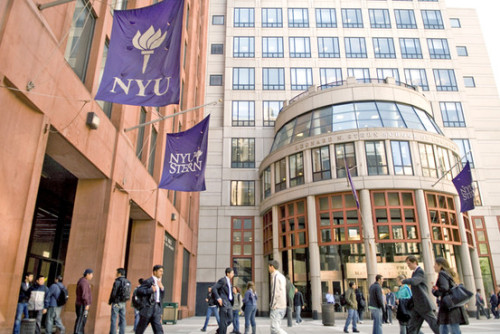
Does the thought of attending school in the heart of New York City – think vertiginous skyscrapers, think sidewalk hot dogs, think honking yellow cabs, think screeching subway, think blinding Times Square, think “I’m walkin’ here!” – make you feel ever so slightly queasy? Maybe NYU ain’t your thing.
If the very notion of hearing crickets chirping at night and waking to the sight of crisp morning fog floating over pastoral rolling hills make you clutch your smartphone to your chest, for fear of slipping out of the comfort of urban action, then you should strike Colby from your list.
Would you rather jump into a packed pit of peckish panthers (or try saying that five times fast?) than attend a contemporary Brit Lit seminar, 12-people strong? You should probably look elsewhere than Vassar, then.

On the other hand, if you would rather your professor know you by name, than by number, and indeed, if you would prefer to be taught by your full-fledged, tenured professor, instead of by a greenhorn graduate student (okay, okay, they’re not that bad!), then you might do well in redirecting your college search from research behemoths, however decorated their name, to smaller, liberal arts colleges.
Okay, long intro, simple message: Your success in college is directly related to whether the school you choose to attend is the right fit for you or not. You can’t wear size 42 shoes if your foot is size 38, and you can’t reach your full potential – even at the best big name school – if you are miserable there and think everything is stupid.
- So how do you determine which school is the right fit, you ask? Let’s start with the basics as you start compiling a list of possible school choices:
- How big is the school? If it’s a university, how big is the undergraduate population versus the graduate population?
- Where is the school? Is it in a small or large city? Is it in the middle of a field? Is it in the ‘burbs? Is it freezing there in the winter (like, REALLY freezing)? Is it scorching hot all year round? Is it in the desert/mountains/tropics/coast? Does it have a contained campus, or are the college buildings (including dorms, cafeterias, academic and athletic facilities, administration offices, etc.) scattered across a wide, undefined area?
- What programs and majors are available? Are undergraduates encouraged – or even allowed – to participate in research? What special programs, such as co-ops or multi-school consortiums, does the school offer?