

According to urbandictionary.com, the new OED, the SAT is defined as the “Stupidity Assessment Test: a test given in high school that judges your worth as a human being.” Now, even a reference tool as universally highly regarded as Urban Dictionary can be misguided in its take on things. The SAT (originally the Scholastic Aptitude Test, now the Scholastic Assessment Test) has come under fire in recent years but it is still the first step in finding the right college for you. It is a necessary evil because given the high volume of applications that colleges receive, a standardized test is essential to sort through them in a comparable way. College Board is now set to improve the SAT in early 2016 to make it more focused, real life based and useful.
- The essay section will be optional
- No more penalties for guessing wrong
- Removal of esoteric vocabulary words
- Scoring goes back to 1600-point scale
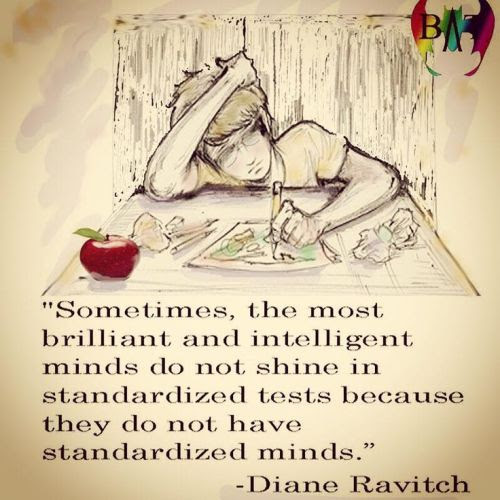
The criticism targeting the SAT – which basically states that the test does not assess what students actually learn in school and is therefore in no way an actual measure of their knowledge and/or learned skills – is reflective of a trend in college admissions offices. Your standardized test scores serve as a benchmark (we’re not encouraging you to bomb your tests, here) and may determine whether your application lands in the bin or the Round II basket. It’s this basket that you’re aiming for, because in Round II, admissions officers will see your high school marks – a reflection of who you have been as a student the last four years – and read your essay and letters of recommendation, which will start giving them a picture of who you really are and what you have to offer their school community.
If you’ve landed on this page, you have more than likely already perused the College Board site that addresses the question that forms the pesky title of this post. The SAT is currently broken into three parts: reading, writing, and mathematics.
- Critical Reading: this section tests your vocabulary, sentence completion, reading comprehension and (surprise, surprise) critical reading skills, using multiple-choice questions.
- Mathematics: a.k.a. the Quantitative or Calculation Section. This section tests a range of math concepts, using both multiple-choice and “grid-in,” or written response, questions. The most comprehensive guide to this section can be found here.
- Writing: this section includes both multiple-choice questions and a short essay, to test whether or not you can write right (or is it right write?).
Remember that your scores, while not unimportant, are far from the only criteria. You are more than just a number, and admissions committees know this. In fact, 700 schools currently do not even require reporting SAT scores. Use your good scores as a hook to get them interested in reading more about you, then knock ‘em out with your essay and letters of recommendation. Take some time to get ready for the exam, but spend most of your energy on making yourself a well-rounded, impressive candidate for admissions by focusing on your real classes, doing extracurricular activities, and developing your writing and interview skills. Making yourself stand out as an extraordinary candidate is what will get you admitted to college, and its essential for scholarships. The SAT is just a tool for elimination.